9 Money Habits That Keep People Broke (Even High Income Earners)
Whether you are aware of them or not, you have money habits that may make you feel more broke than you actually are.
Working in the finance industry, I got to see how people across all income levels handle their money. And one thing was made very clear to me: having a big bank balance doesn’t automatically make someone financially responsible, just as having less money doesn’t mean someone is careless with it.
In this post, I’m sharing 9 money habits that keep people broke, no matter the amount they make—so you can avoid the same mistakes and take control of your financial future.
let's get into: 9 MONEY HABITS THAT KEEP PEOPLE BROKE (EVEN HIGH INCOME EARNERS)
Please note that this site contains affiliate links to products or services from third-party websites. Furthermore, we are not financial advisors. The information provided is for general informational purposes only and should not be considered as professional financial advice. By reading this post, you acknowledge and agree to the full terms of our disclaimer.
Table of Contents
- 1. Blaming the Economy for Everything
- 2. Spending Future Money
- 3. Lifestyle Inflation Trap
- 4. Not Believing for More (Giving Up on Your Calling)
- 5. No Buffer or Emergency Fund
- 6. Poor Financial Literacy
- 7. Not Using Company Benefits (401k Match, HSA/FSA)
- 8. Striving for a Life That’s Not Yours
- 9. Relying on Only One Source of Income
- Get Out Of Debt YouTube Video
“But remember the LORD your God, for it is He who gives you the ability to produce wealth, and so confirms His covenant, which He swore to your ancestors, as it is today.”
Deuteronomy 8:18 Tweet
Join our Personal Finance group!
Join us in achieving financial stability! Receive a wealth of practical tips, budgeting hacks, investment insights, and strategies to achieve your financial goals!
Blaming the Economy for Everything
Poor Money Habit #1
Can I be honest? It genuinely surprises me how many clients and people online list all the reasons they can’t save, invest, or plan for their financial future. They usually point their fingers at the economy, taxes, inflation, or their job. And while those challenges are very real, constantly blaming external factors can make you feel like you have zero control over your life. Which is just NOT true.
Yes, the economy is tough and some systems make it harder to get ahead. But staying in a victim mindset will not help you move forward financially—or spiritually. When you focus on the things that are out of your control, you stop looking for what is in your control, and that’s where progress actually begins.
Progress is refusing to LET reality and circumstances define YOUR limits and God’s hands on your life. As believers, we are called to steward what we’ve been given and trust God to guide us through hardships.
Limiting yourself with “I can’t because dot dot dot ” will keep you chained down, when God has already set you free. He has given you the ability and wisdom to make progress right where you are.

Ultimately Monthly Budgetsheet
For only $4.99, get this monthly budget spreadsheet that will help you plan, track, and manage your money one month at a time! Feel less overwhelmed and more in control.
Spending Future Money
Poor Money Habit #2
Have you ever spent your paycheck before it even hit your account? Or knew you were getting $200 for your birthday in a few weeks and decided to spend that money today? Yeah—been there. And it almost always backfires. The prudent sees danger and hides himself, but the simple go on and suffer for it (Proverbs 22:3).
Instead of being honest & intentional with your finances, you decide to give in to your desires. You end up suffering for making financial decisions based on income you expect to receive, instead of money you actually have. This creates a cycle where you’re CONSTANTLY catching up, even if you earn a decent salary.
This can look like Using credit cards as if they’re extra income, but not paying them off in full every month. It can look like financing or after paying everything. Or simply spending more than you make because you’re confident money will be available later.
Future money is not guaranteed. Life is very unpredictable, emergencies happen and income changes. When you are NOT intentional with how you spend, you set your future self up for financial instability and insecurity.
To get yourself out of this hole, treat credit as a tool—not income—and to base your lifestyle on what you already have, not what you hope to have.
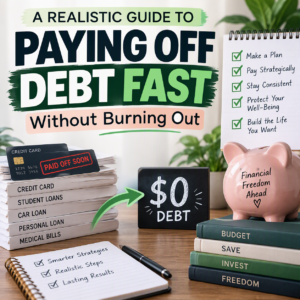
If you’ve built debt from spending future money, don’t feel discouraged—focus on paying it off strategically. I walk you through exactly how to do that step-by-step in my video Get Out of Debt Fast.
And if you want the exact debt payoff tool I use, you can grab it in my Etsy shop to help you stay organized and on track.
Lifestyle Inflation Trap
Poor Money Habit #3
This is a huge habit that keeps people broke—even when their income is going up. Many people wonder why they still feel like they don’t have any money left, even though they’re earning more than they did a year ago. Often, it’s not just rising costs—it’s increasing your financial responsibilities simply because you can afford them now. A bigger paycheck leads to a bigger house, a newer car, more subscriptions, more eating out, and higher monthly payments across the board.
But just because you can afford something doesn’t mean you should commit to **spending your money on it.
For example, you might qualify for a larger home and think, “I make more now, so why not?”—but committing to an extra $2,000 a month in housing costs can lock you into needing a higher income, it can limit your savings, delay your financial goals, or restrict your ability to enjoy your money on other things.
More income should create margin and financial security—not bigger bills. If every raise turns into a new expense or responsibility, it’s no surprise that you’ll always feel broke—no matter how much you make. It is good to enjoy your money, but to decrease financial stress, a healthy guideline is to keep your fixed financial obligations around 50–60% of your take-home pay. That gives you room to save, invest, give, and still enjoy life.
You’re in control. If the reason behind making more is because you want to commit more funds toward a better car or your dream home, then do it. But you don’t have to upgrade your lifestyle with every raise. Be wise with choosing your peace and progress. Your choices compound over time, just like money does.
Not Believing for More (Giving Up on Your Calling)
Poor Money Habit #4
You may not want to be broke, but deep down, you’ve stopped believing that more is possible for your financial future. Instead of feeling content while still moving forward, you’ve given in to your circumstances. And there’s a big difference between contentment and settling.
Contentment says, “I’m grateful for where I am, but I’m still growing.”
Settling says, “This is just how it is for me.”
When you stop believing for more—more opportunities, wisdom etc—you stop taking steps forward in faith. You might stay stuck in dissatisfaction, feeling frustrated with your situation but not fully believing you’re called, or equipped to change it.
Faith requires action.
Believing for more doesn’t mean being ungrateful or chasing money for selfish reasons—it means trusting that God can expand your stewardship and also capacity to be a blessing. You can honor your current season, and move forward in faith at the same time. Don’t let your circumstances, shrink Your Almighty God. Your present situation is not your permanent assignment.
No Buffer or Emergency Fund
Poor Money Habit #5
Not having a financial buffer or emergency fund is one of the biggest money habits that keeps people broke. These two safety nets are a must for financial security and avoiding debt when life happens.
A buffer is extra money you keep in your checking account to cover small, unexpected expenses—like a higher-than-usual utility bill or a parking ticket. It’s not money you plan to spend; it’s simply a cushion. This can be around $200–$500 in your checking account so you’re not stressed when something pops up.
An emergency fund, on the other hand, is money set aside in a savings account specifically for bigger, unexpected events—like a car repair, medical bill, job loss, or urgent travel. Ideally, it should cover 3–6 months of essential expenses, but if that feels overwhelming, start with a realistic goal like $1,000. That first $1,000 can be the difference between staying financially stable and going deeper into credit card debt.
Without a buffer or emergency fund, every surprise becomes a crisis—and every crisis often turns into more debt. Building these funds may not feel attainable at times or exciting, but they are one of the most necessary steps toward financial peace and stability. If you struggle with saving or are unsure how to even begin, watch my videos Zero Based Budget for Beginners and Save Money Faster on a Tighter Budget.
How to Pay Off Debt Fast! | Debt Payoff Strategies for Any Income Bracket
Poor Financial Literacy
Poor Money Habit #6
Most of us did not grow up with financial education. We weren’t taught how to budget, save, invest, or manage debt in school, at least I wasn’t. Many of us had to learn through the internet, or painful life experiences. So lacking financial knowledge at first is not the problem—staying financially unaware is.
Avoiding learning about money because you “don’t make enough,” feel overwhelmed, or don’t want to face reality will not benefit you whatsoever. Financial literacy is what helps you make wise decisions with what you already have—whether it’s a little or a lot. Without knowledge, it’s easy to make money mistakes like not saving, misusing credit, missing out on investing opportunities, or staying stuck in cycles of financial stress.
“For the protection of wisdom is like the protection of money, and the advantage of knowledge is that wisdom preserves the life of him who has it” (Ecclesiastes 7:12).
In other words, wisdom and money both provide protection—but wisdom helps you steward your money well and avoid costly mistakes.
Financial literacy gives you control and clarity. The more you learn about important personal finance topics, the more confident you become to build a stable future and make wise financial decisions.
Not Using Company Benefits (401k Match, HSA/FSA)
Poor Money Habit #7
If your employer offers benefits like a 401(k) with a company match, an HSA, FSA, or other reimbursements, not using them is literally leaving free money on the table.
A 401(k) match is extra money your employer contributes toward YOUR retirement—simply because you contribute. An HSA or FSA can help you pay for medical expenses with pre-tax dollars, lowering your taxable income and saving you money today and in the long-run.
These benefits are designed to help you build wealth, reduce taxes, and overall protect your future financial health.
Many high-income earners stay broke because they ignore these tools. They assume retirement is “later,” or they don’t take the time to understand how these accounts work. But the earlier you enroll and contribute, the more time your money has to grow through compound interest.
Take time to review your company benefits package, enroll in the programs available to you, and if you can, at least contribute enough to get the full employer match. I promise, your future self will thank you.
Striving for a Life That’s Not Yours
Poor Money Habit #8
This looks like chasing a lifestyle that doesn’t align with your values, your income, or season of life. I say this a lot, social media makes it easy to believe that everyone is living in luxury, but trying to copy what you see online often leads to financial instability and lifestyle insecurity.
Buying things for appearance instead of purpose or living in dissatisfaction instead of gratitude will not just drain your finances but also your life. And even worse, it will get in the way of God’s blessings because you believe what you have for yourself is better than anything God has for you.
When you stop trying to keep up with others and start living intentionally, your money becomes a tool for purpose instead of pressure.
Relying on Only One Source of Income
Poor Money Habit #9
Your 9–5 job is a blessing, and for many people, a single steady income can be enough to live a happy, fulfilling life. BUT, relying on only one source of income CAN keep you financially vulnerable and feeling stuck, especially if that income isn’t enough to fund your present lifestyle, financial goals and your retirement.
Many people never think about increasing their income or investing for the future until they realize they may have to work far past retirement age just to live comfortably or survive. If you run the numbers and your current salary allows you to save, invest, retire on time, and enjoy life today—praise God, you’re in a great position. But if it doesn’t, something needs to change.
You may need to negotiate your salary, pursue a higher-paying role, build in-demand skills, or create additional income streams such as a side hustle, freelance work, digital products, investing, or a small business. Increasing your income gives you margin—margin to live a joyful life without constant financial stress.
I personally advocate for multiple income streams because life is unpredictable.
Companies downsize, layoffs happen, emergencies arise, and sometimes you simply need a break. Having other sources of income can protect you during uncertain seasons and provide stability when your main job is affected.
Building additional income takes time and lots of effort, but it can dramatically improve your financial security and peace of mind. You will also gain well deserved freedom to enjoy your job, rest when needed, and live more generously without fear.
this concludes money habits that keep you broke!
Feeling broke—or actually being broke—does not have to be permanent. It can be fixed. The first step is understanding your cash flow so you can make intentional decisions and stop repeating the money habits that have been holding you back. Stay rooted in faith and trust that there is more ahead for you—this season is not the end of your story.
I hope you enjoyed this post and found it helpful. If you did, share it with someone who may need it too!
Have a blessed rest of your day!
Love,
Jas Joy

Other Posts You May Like

Related Topics
A Realistic Guide to Paying Off Debt Fast (Without Burning Out)
9 Money Habits That Keep People Broke (Even High Income Earners)